What's happening in
Vishal Parekh • October 21, 2026
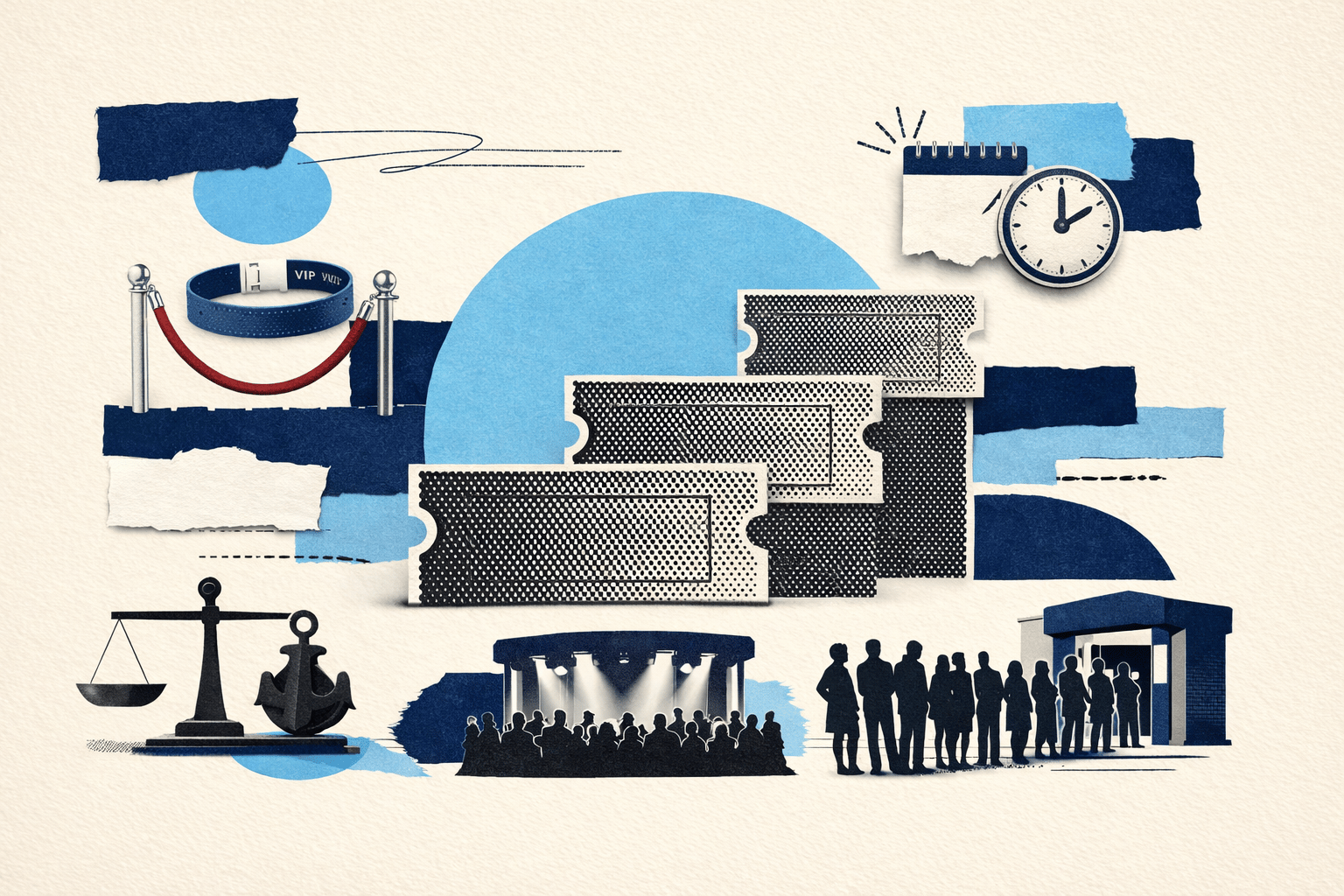
A strong ticket tier pricing strategy shapes how buyers view your event before they ever check out. Ticket tiers do more than collect revenue. They help position the event, guide buyer choice, and create momentum through the sales cycle.
If you are working out how to price event tickets, this guide will help you build a practical mix of general and premium options without overcomplicating your setup.
A ticket tier does two jobs at once: it gives buyers options and signals value. With only one flat price, the decision is simple, but your pricing flexibility is limited.
Thoughtful tiers let people choose based on budget, urgency, and experience level. That often improves conversion because different buyers are willing to pay for different things.
Too many tiers can have the opposite effect. They can confuse buyers, slow decisions, and make the event harder to understand. The goal is not more ticket types. The goal is the right ones.
Before you decide on a tier structure, answer three basic questions.
Think about the main audience segments you expect.
If your audience is mostly price-sensitive, a simpler structure with a strong entry-level option may work best. If your audience values exclusivity, comfort, access, or convenience, a premium tier like a VIP ticket may make sense.
Not every event needs a VIP tier. A community workshop, college event, or small local show may convert better with simple pricing.
For concerts, comedy shows, nightlife events, fan-driven performances, and curated experiences, tiering can add real value. Ask whether you can offer meaningful differences such as:
If you cannot clearly explain why one tier costs more, buyers may see the premium option as arbitrary.
Your pricing structure should support a real objective.
The right answer depends on the event. For some organizers, a packed room matters more than a high average ticket price. For others, premium sales are essential to make the economics work.
One of the most common organizer questions is how many ticket tiers should I offer.
For most events, two to four tiers is enough. That range gives buyers meaningful choice without making checkout confusing.
Best for very small events, simple local gatherings, and events where the experience is identical for everyone.
The tradeoff is limited pricing flexibility, no upsell path, and less room to capture different willingness to pay.
This works well for general admission plus VIP, or standard access plus a premium experience. It is often the easiest place to start if you are comparing general vs vip pricing for organizers.
Three tiers often create the best balance between clarity and revenue opportunity. Common versions include early-bird, regular, and last-phase pricing, or general, premium, and VIP.
Four tiers can work for larger events or for setups that combine time-based and experience-based segmentation.
Beyond four tiers, be careful. Unless the event is large or highly segmented, too many options can make buyers pause instead of purchase.
You do not need to invent a model from scratch. Most successful structures fit into a few familiar patterns.
This is one of the most useful forms of early-bird pricing. You start with a lower rate for a limited period or quantity, then move to a standard rate later.
This structure is especially useful when you want momentum early in the campaign.
This is the clearest version of general vs vip pricing for organizers. You offer a standard ticket for core access and a VIP ticket for a better or more exclusive experience.
If you want a consumer-side view of what buyers consider when comparing these options, see General vs VIP Event Tickets Guide.
This structure changes price as lower-priced inventory sells out. One batch sells at the lowest price, then the next batch opens at a higher rate.
This can work well for demand-led events where audience urgency is part of buying behavior.
This works when each ticket level includes a clearly different experience.
Each tier must feel genuinely different, not just more expensive.
A good ticket tier pricing strategy is not only about cost and margin. It also depends on how buyers evaluate choices.
Anchor pricing works when a higher-priced ticket helps make the mid-tier feel more reasonable.
If you offer general, premium, and VIP, many buyers will compare the middle option against the highest one. If VIP is positioned well, premium can look like a smart compromise.
A middle tier can guide buyer decisions when it makes another option feel clearly better for the difference in price.
This only works if the structure is easy to understand. If buyers cannot quickly see the value difference, the pricing loses its effect.
Early-bird pricing does more than lower the entry price. It tells buyers that waiting has a cost, which can move hesitant people into action.
Make sure the shift from early-bird to the next tier feels fair and clear.
Buyers do not judge a ticket only by what is included. They also judge how the offer is framed.
A well-described VIP ticket can feel more desirable when the benefits are specific:
The stronger the perceived improvement, the easier it is to justify a higher price.
Many organizers ask how to set VIP ticket price without underselling it or making it unrealistic.
The first rule is simple: do not choose a VIP price by guesswork alone.
Write down the benefits clearly. If the VIP offer is vague, pricing it becomes difficult.
A VIP ticket should usually provide one or more of these:
If it is simply the same event with a higher label, buyers will notice.
Consider any extra organizer cost attached to VIP, such as:
Your VIP price should reflect both the extra cost and the extra perceived value.
VIP should feel meaningfully better than general admission. The price difference should match the experience difference.
If the gap is too small, you may undercut revenue opportunity. If the gap is too large without enough added value, conversion can suffer.
Scarcity supports value. If everyone can buy VIP in unlimited quantity, it may stop feeling premium.
A capped VIP allocation often makes the offer feel more credible and desirable.
If your team cannot quickly explain why VIP costs more, buyers may struggle too.
Your tiers tell buyers what kind of event this is. That is why a strong ticket tier pricing strategy also supports branding.
That may be exactly right for a community-first or mass-attendance event.
It suggests the event has layers of experience and appeals to different attendee expectations.
If buyers see confusing names, overlapping benefits, or random price jumps, they may question the professionalism of the event itself.
This is especially important for first-time organizers. Your ticket tiers may be one of the first things a buyer sees, so they should feel intentional.
If you are still deciding how to price event tickets, use this simple framework.
This is the most accessible option. It should feel attainable and attractive enough to start conversions.
This is often where many buyers land. It should offer the clearest balance of access and value.
This is where you capture buyers willing to pay more for a better experience.
Not every event needs all three. But this framework helps you think in terms of buyer segments instead of arbitrary numbers.
For more context on organizer-side economics, read How Much Does It Cost to Sell Tickets Online in India? Fee Breakdown for Organizers.
More choice is not always better. If buyers have to study the listing too long, you risk losing them.
A VIP ticket needs a clear reason to exist.
Each tier should have a visible logic behind it.
Without an early-bird or first-wave incentive, buyers may delay.
Keep tier names clear and familiar. Buyers should understand them instantly.
Different event types support different pricing expectations. For example, comedy audiences often compare lineup strength, venue quality, and access inclusions.
This organizer-facing view pairs well with Comedy Show Ticket Prices in India: What You're Really Paying For.
If each ticket tier has a purpose, your listing becomes easier to understand and market.
Use labels buyers already recognize:
Avoid internal or overly creative names unless they are obvious.
For each tier, describe what changes:
If you are promoting urgency, your creative should highlight limited early pricing or limited premium access consistently.
For broader event setup help, see Organizer Guide: List, Sell & Manage Your Event and the For Organizers page.
Check that a first-time buyer can understand:
That clarity can improve conversions more than extra complexity.
And once your tiers are live, support them with promotion. From Idea to Sold Out: A Step-by-Step Event Marketing Checklist for Organizers is a useful next read for connecting pricing and sales momentum.
Before you publish your listing, ask:
If the answer is yes to most of these, your pricing structure is probably in a strong place.
The best ticket tier pricing strategy is clear, intentional, and built around real buyer behavior. Keep your structure simple, create meaningful differences between tiers, and use early-bird and premium options only when they genuinely support your event goals.
If you are ready to launch, list your event with the right pricing tiers on Tykkit and build a setup that helps buyers choose confidently.
For most events, two to four tiers is enough. That gives buyers meaningful choice without making checkout confusing, while still giving organizers room for entry-level, premium, or early-bird options.
No. A community workshop, college event, or small local show may work better with simple pricing. VIP makes more sense when you can offer meaningful differences such as better access, comfort, convenience, or exclusive extras.
A simple setup is one standard ticket for core access and one VIP ticket for a better or more exclusive experience. This works well because it is easy for buyers to understand and creates a natural upsell path.
Start by defining what VIP includes, estimating the real added cost, and comparing it with your general ticket. VIP should feel meaningfully better than general admission, and the benefits should be easy to explain clearly.
Common mistakes include offering too many options, weak VIP differentiation, price jumps that feel random, no early urgency, poor tier naming, and ignoring the pricing expectations of your event category.