What's happening in
Pratik Malvi • October 21, 2026
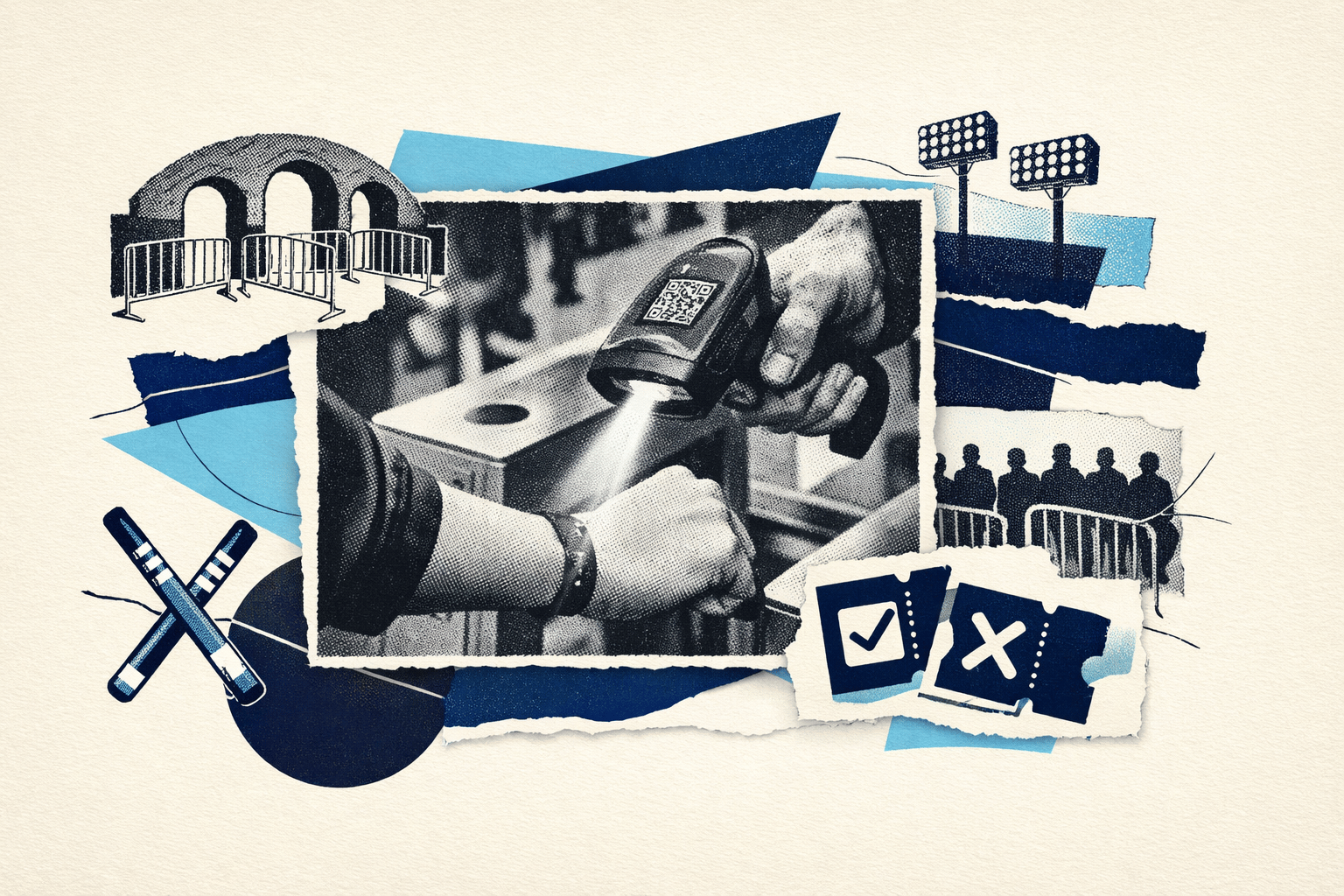
If you are comparing tools for event entry management qr scanning, the real question is simple: can your team move people in quickly without losing control?
On event day, entry is where guest experience, staffing efficiency, and fraud prevention meet. This guide explains how Tykkit Backstage handles QR scanning and entry management, and why that matters for organizers running everything from college fests to large cultural nights and stadium-scale shows.
Ticket sales get the attention before an event. Entry operations decide how the event actually begins.
A crowded gate can create problems fast:
For small events, these issues may be manageable. For high-volume events such as Navratri celebrations, college fests, concerts, and major live shows, weak gate control can affect the entire experience.
Even when your event is well marketed and well sold, poor entry flow can damage the brand impression in the first few minutes. That is where QR scanning becomes more than a convenience. It becomes an operational control system.
If you want a broader look at the organizer side of the platform, start with the Tykkit Backstage organizer tools overview. This article goes deeper into one specific function: entry management.
Tykkit Backstage is the organizer-facing side of Tykkit built to support event operations. For entry, it helps teams verify tickets at the gate using QR-based scanning so staff can confirm whether a ticket is valid and manage attendee access more efficiently.
In practical terms, that means:
For organizers evaluating a ticket scanning app for organizers, the value is not just that a code can be scanned. The value is that scanning becomes part of a repeatable gate workflow.
Many organizers ask: how does qr code ticket scanning work for organizers in real event conditions?
At a high level, the process is straightforward.
When attendees book through Tykkit, they receive digital tickets through WhatsApp and email. That ticket includes a QR code linked to the booking record.
Because the ticket is delivered digitally, attendees can usually access it quickly on their phones instead of depending on printed copies or manual confirmation.
At the venue, the organizer's team uses Tykkit Backstage to scan incoming tickets. Instead of searching spreadsheets, printed guest lists, or screenshots shared in group chats, the gate team works from one entry flow.
As each attendee arrives, the staff member scans the QR code shown on the ticket. The system reads the code and checks its status.
This is the core of event entry management qr scanning: fast validation at the point of entry.
The scan helps staff understand whether the ticket should be accepted. For example, it can support decisions around:
This reduces back-and-forth at the gate and gives staff more confidence in what they are approving.
If the ticket is valid, the attendee moves forward. If there is an issue, the team can handle it in a separate resolution flow instead of slowing the entire queue.
That separation matters. When every exception is handled in the main line, the queue stalls. When valid scans move continuously, the gate stays fluid even when a few tickets need review.
Most events do not have evenly distributed arrivals. Crowds often build in waves:
Manual verification struggles under these conditions. QR scanning gives staff a faster way to process each ticket, which helps reduce bottlenecks during rush periods.
For a college fest or cultural event with multiple guest categories, this can be the difference between a manageable queue and a chaotic one.
Large events often use more than one entry point. That increases capacity, but only if validation stays consistent.
A structured scanning process helps teams apply the same check across gates instead of relying on informal judgment. This is especially useful when you have:
Guests rarely remember the operational details of your gate setup. They remember whether they had to stand in a slow-moving line after arriving on time.
A smoother check-in process improves the first impression of the event and reduces complaints before people even enter the venue.
For organizers already investing in promotion, this matters. Your event marketing work should not be undermined by a poor arrival experience. For planning the full journey from launch to attendance, see From Idea to Sold Out: A Step-by-Step Event Marketing Checklist for Organizers.
Fraud prevention is one of the strongest reasons to use a proper entry system.
One common gate issue is duplicate use of the same ticket. That may happen through:
With QR-based validation, organizers have a stronger way to identify when the same ticket is being presented again.
A screenshot can look convincing. A name on a list can be misspelled. A WhatsApp forward can seem legitimate in a crowded entry line.
Without a scanning system, staff often make decisions based on partial information. With event entry management qr scanning, they have a clearer verification step before allowing access.
Not every invalid scan is fraud. Some cases are genuine attendee issues. But the key advantage is that these cases can be moved out of the main queue for resolution.
Tykkit Backstage entry management is especially relevant for organizers running events with volume, complexity, or time pressure.
High footfall and concentrated entry windows make festive events one of the strongest use cases for QR scanning. When large numbers of attendees arrive within a short period, gate efficiency becomes critical.
College events often involve a mix of students, alumni, outside attendees, and invited guests. A more structured ticket scanning app for organizers helps reduce confusion and keeps entry organized.
If you are working on campus events specifically, How Colleges Can List and Sell Tickets for Fests on Tykkit is a useful next read.
For major performances, the gate is one of the highest-risk touchpoints. Delays, duplicate attempts, and inconsistent validation can all escalate quickly when volumes are high. QR scanning supports faster movement and tighter control.
If you are comparing options and asking for the best entry management tool for events, focus on operational usefulness rather than feature lists alone.
Look for a tool that helps you:
Also consider how the tool fits into your full organizer workflow. Entry management works best when it is connected to the same platform where tickets are sold and issued.
To understand the wider organizer offering, visit Tykkit for organizers.
A common mistake is treating entry as something to solve on the morning of the event. In reality, it starts much earlier.
Your ticketing setup affects:
That is why entry operations should be part of your ticketing decision, not an afterthought. If you are reviewing platform costs as part of that decision, see How Much Does It Cost to Sell Tickets Online in India? Fee Breakdown for Organizers.
For organizers, event entry management qr scanning is about speed, control, and confidence on event day. Tykkit Backstage helps turn ticket validation into a structured entry workflow, which is especially valuable for high-volume events where delays and duplicate use can create immediate problems.
If you want a better way to manage gates, reduce bottlenecks, and improve the attendee arrival experience, see Tykkit Backstage in action.
Tykkit Backstage is the organizer-facing side of Tykkit built to support event operations. For entry, it helps teams verify tickets at the gate using QR-based scanning so staff can confirm whether a ticket is valid and manage attendee access more efficiently.
When attendees book through Tykkit, they receive digital tickets through WhatsApp and email with a QR code linked to the booking record. At the venue, the organizer's team uses Tykkit Backstage to scan the QR code, check its status, and decide whether the attendee should be admitted or redirected for resolution.
QR scanning helps staff process tickets faster during peak arrival times, apply consistent checks across multiple gates, and improve the attendee experience by reducing slow-moving lines at entry.
Yes. With QR-based validation, organizers have a stronger way to identify when the same ticket is being presented again. It also gives staff a clearer verification step instead of relying only on visual checks such as screenshots or names on a list.
The draft highlights Navratri and festive events, college fests, concerts, and stadium-scale shows as strong use cases, especially where there is high footfall, entry complexity, or time pressure at the gate.